

Debunking the Myths:
Are These 5 Self-Checkout Misconceptions Holding Your Convenience Store Back?
Convenience store leaders always want to make their customers’ visits easier and faster. Self-checkout can reduce lines, speed up payment, and enhance the customer experience. Convenience stores are beginning to adopt self-checkout, yet they fall behind other retailer competitors. 53% percent of food and grocery segments have mature self-checkout processes compared to 34% of convenience stores.
Why are convenience stores lagging behind their retail competitors? These misconceptions may be the cause

myth #1
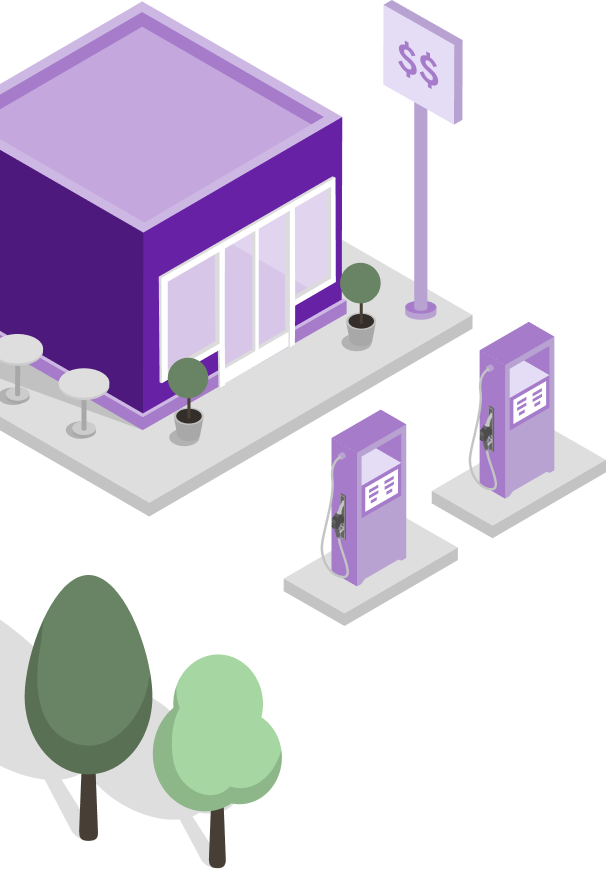
Self-checkout is for large grocers, not smaller C-stores
myth #1
Self-checkout is for large grocers, not smaller C-stores
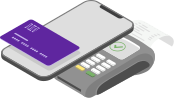
With next-generation self-checkout hardware, retailers can transition cash-accepting capabilities to adapt to evolving needs.


Cash is common in C-stores, especially for gas and small purchases, but it slows transactions. Shifting to self-checkout speeds up the process, reducing in-store and pump queues.
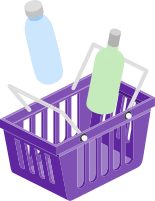
Self-checkout, originally for grocers, is most effective with basket sizes of nine items or less—making C-stores, with 2-3 items per basket, the ideal fit.
With next-generation self-checkout hardware, retailers can transition cash-accepting capabilities to adapt to evolving needs.

The reality
Self-checkout works well for retailers of any size and is especially suited to help smaller C-stores improve their operations.
myth #2
Self-checkout leads to
increased shrink

Intentional shrink often happens before customers reach self-checkout. Plus, self-checkout reduces employee money-handling, further minimizing shrink opportunities.

Touchscreen cameras remind customers they're on view, and systems prompt them to scan missed items.
With self-checkout, employees can leave the counter to greet customers, assist with products, and help at checkout. 81% of retailers position staff near self-checkout to reduce shrink and enhance service.1

myth #2
Self-checkout leads to
increased shrink

Touchscreen cameras remind customers they're on view, and systems prompt them to scan missed items.
The reality
Multiple factors can cause shrink, so it’s critical to identify how and where it occurs. Self-checkout technology and employee interaction can deter shrink and deliver better customer experiences.
myth #3
Self-checkout takes up too much
physical space
myth #3
Self-checkout takes up too much
physical space


Store sizes vary, and so do
self-checkout options—from full lanes to kiosks
or
counter-mounted registers—allowing C-stores to choose the best fit for their
space.
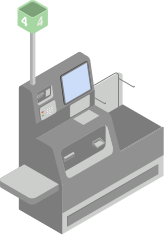
Self-checkout lanes take up less space than a traditional assisted checkout.
Self-checkout can be placed wherever the retailer finds value—including a second exit point—with just a power source and network connection. SCO is flexible and can be configured to meet the unique needs of each store.
Store sizes vary, and so do
self-checkout options—from full lanes to kiosks
or
counter-mounted registers—allowing C-stores to choose the best fit for their
space.
The reality
Retailers can offer self-checkout no matter the convenience store’s size. With many variations of self-checkout solutions, retailers can identify the best configuration for their store.
myth #4
Self-checkout doesn’t
save on labor costs
Self-checkout improves workforce efficiency, with 58% of executives reporting lower labor costs.1
C-store workers often spend 15-20 hours a week on uninspiring, routine tasks like counting cash.2

With self-checkout, C-store workers can focus on higher-value tasks like cleaning, stocking, food prep, and customer assistance.In hybrid models, self-checkout stations can also be switched to assisted mode during peak hours to ease foot traffic and drive efficiency.

myth #4
Self-checkout doesn’t
save on labor costs
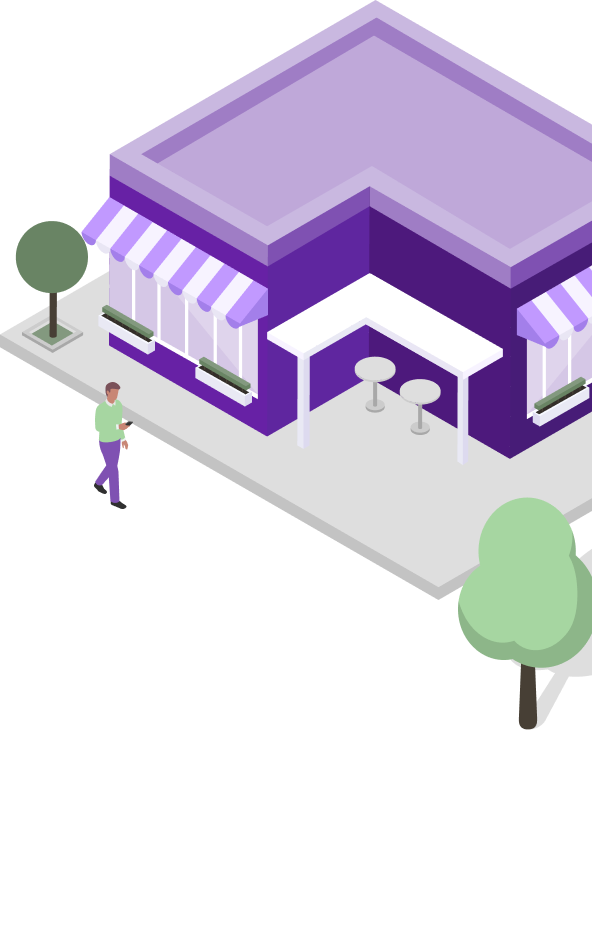
C-store workers often spend 15-20 hours a week on uninspiring, routine tasks like counting cash.2
The reality
Self-checkout isn’t a replacement for employees. However, it does help C-stores maximize their staff and provide better customer service.
myth #5
Self-checkout leads to decreased
customer satisfaction
myth #5
Self-checkout leads to decreased
customer satisfaction
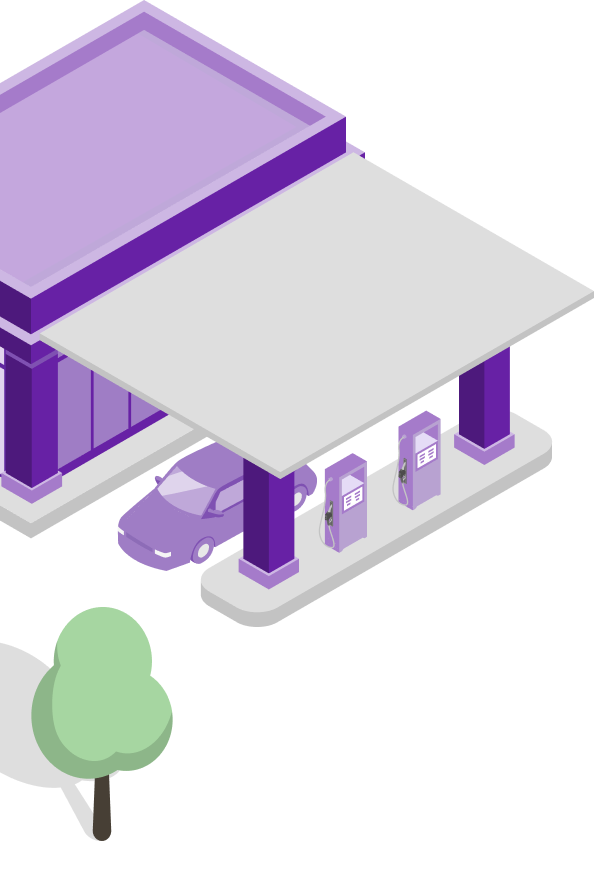
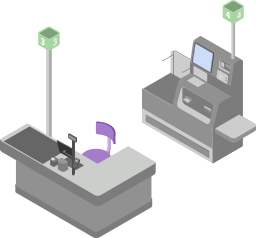
Self-checkout offers customers more autonomy. By providing both traditional and self-checkout options, C-stores let customers choose the method that best fits their needs.
Contrary to this myth, 79% of retail executives polled in a survey say self-checkout boosts customer satisfaction.4
In a survey, 85% of customers found self-service faster, and 60% preferred it.3
Self-checkout offers customers more autonomy. By providing both traditional and self-checkout options, C-stores let customers choose the method that best fits their needs. Today’s advanced checkout options—like Halo—help speed up transactions and improve store throughput.

The reality
Retailers can offer self-checkout no matter the convenience store’s size. With many variations of self-checkout solutions, retailers can identify the best configuration for their location.